| I was brought up wanting to know why.
Why is something the way it is? Why are we the way we are? Why, why, why?
I believed that if I could gather enough knowledge, understand enough, and find the answers to enough questions, I could somehow use that knowledge to make things permanently better.
But does knowledge alone really do that?
Having stepped onto the path of the Mystery School and Know Thyself, I have come to understand that information does not necessarily equate to wisdom. Possessing knowledge does not mean that we know how to apply it, live it or transform our experience through it.
So, what does it really mean to truly understand and embody something?
From Knowledge to Understanding
We live in a world filled with information. We can read books, watch videos, attend courses and gather seemingly endless amounts of knowledge. Yet having the right information does not necessarily mean that we understand how to apply it.
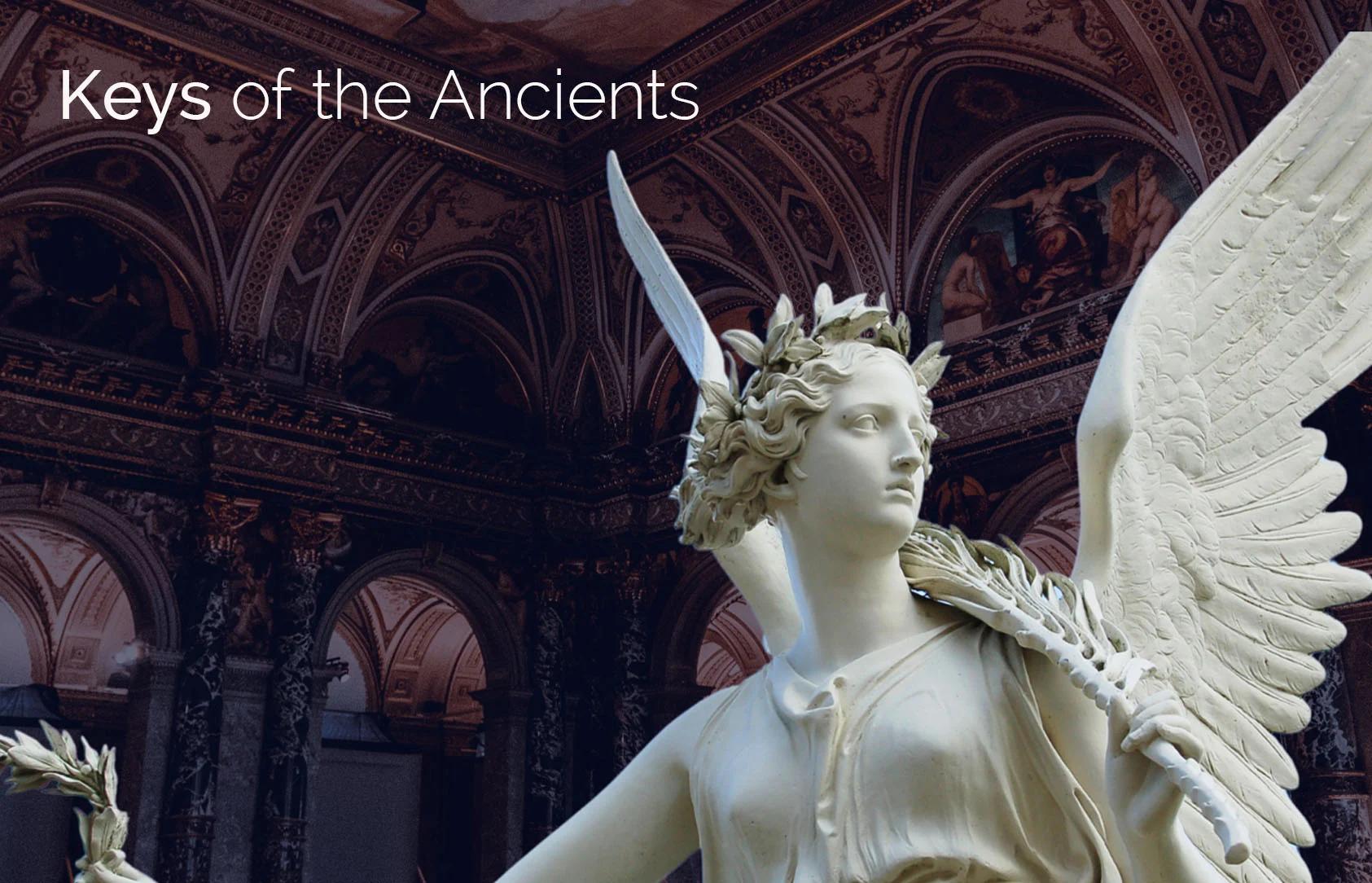
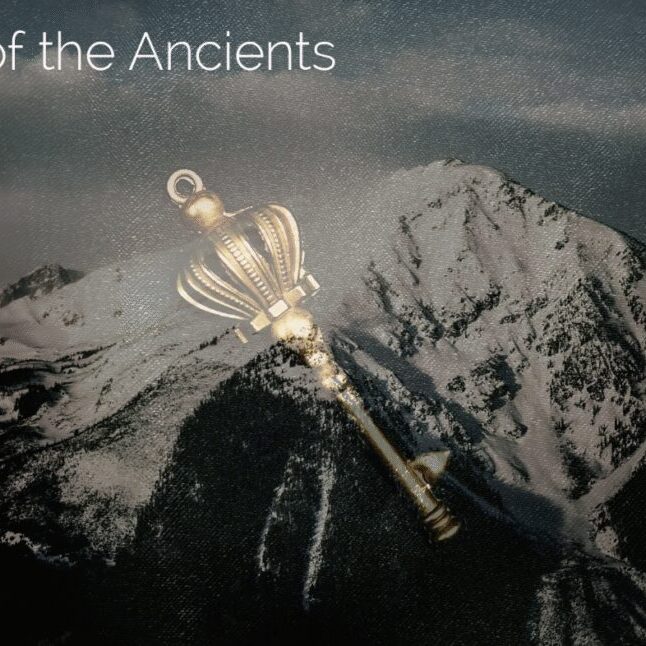
This is one of the central ideas explored by Sovereign Ipsissimus Dave Lanyon in Keys of the Ancients Explained | Questions and Answers with Dave Lanyon (click for the video)
From a Hermetic perspective, a key is not simply another piece of information. It is an “operator”. Something that allows us to understand how something works and, importantly, how to make that understanding work in our lives.
As he explains, humanity can often know many of the “correct answers” while lacking the operating key that allows those answers to become lived experience.
We may know that we should live from the heart, for example. We may understand the concept intellectually. But knowing the words is very different from knowing how to actually live that way.
This distinction between knowledge and application sits at the heart of the conversation.
Knowledge Is Not the Same as Wisdom
One of the most compelling themes in the video is the distinction between intelligence and wisdom.
Intelligence can enable us to acquire enormous amounts of information and become highly knowledgeable or skilled in a particular field. Wisdom, however, involves understanding how to use what we know.
Sovereign Ipsissimus Dave points out that someone can be exceptionally intelligent and still make choices that create harmful results. Wisdom, by contrast, is something that can be cultivated, developed and shared.
This raises an important question for anyone interested in spiritual development:
Am I simply collecting spiritual knowledge, or am I becoming wiser through the way I live?
It is easy to accumulate teachings about consciousness, spirituality, meditation or personal growth. The deeper challenge is to examine whether those teachings are actually changing the way we think, choose, respond and behave.
The Importance of Knowing Yourself
The ancient instruction to “Know Thyself” runs throughout the discussion.
True self-knowledge is essential because our assumptions can easily become confused with reality. When we do not understand ourselves, we can fill the gaps in our knowledge with presumption, misjudgement and belief.
We may then make decisions based upon what we think is true rather than what we have genuinely examined.
This makes self-inquiry much more than an exercise in introspection. It becomes a practical tool for developing discernment.
Clarity allows us to look honestly at the beliefs, habits and choices that have shaped our lives and ask a simple but powerful question:
Is this still serving me?
Sometimes the answer will be yes.
Sometimes it will be no.
The important thing is having the clarity to recognise the difference for ourselves rather than simply accepting someone else’s interpretation.
Sometimes, clarity can reveal that something we once believed was protecting us has actually become a prison.
And once we can see that, we have the possibility of choosing differently.
From Illusion to Responsibility
Another powerful message in the video is the movement away from seeing ourselves as passive recipients of life.
Hermetic teaching asks us to take responsibility for our choices. This does not mean pretending that difficult or painful things do not happen. It does not mean blaming ourselves for every circumstance we encounter.
Rather, even when circumstances are challenging, there remains an important question:
What can I choose now?
There is power in that question.
It shifts our attention away from simply asking why something happened and towards understanding what we can do with what is happening.
In this sense, responsibility is not about blame. It is about recognising our capacity to respond.
The same principle appears in the discussion around our relationship with God. Spiritual maturity can involve moving beyond simply asking what God can give us and beginning to ask how we can serve, contribute and participate.
Spiritual growth therefore becomes an active relationship rather than a passive expectation.
Difference Does Not Have to Become Division
People will disagree.
We have different experiences, perspectives, preferences and beliefs. Hermetic understanding does not require everyone to become identical.
Instead, our differences can become like different musical notes within a greater symphony.
The key is that disagreement does not have to become hatred.
We can disagree profoundly while still wishing another person well. We can hold a different perspective without deciding that the other person is unworthy of dignity, safety or a good life.
This is a surprisingly practical spiritual teaching.
It asks us to distinguish between difference and division.
Perhaps we do not need to eliminate our differences in order to create greater harmony. Perhaps the deeper challenge is learning how to hold our differences without allowing them to become destructive.
A Path Towards Greater Freedom
Ultimately, Keys of the Ancients presents a path towards greater clarity, wisdom and personal responsibility.
It is not described as a teaching designed simply to make people feel comfortable. Instead, it challenges students to examine themselves honestly, question their assumptions and recognise what may no longer serve them.
That process may not always be comfortable.
But perhaps discomfort is sometimes the beginning of seeing something we were previously unwilling or unable to see.
The video presents this process as part of transformation — a movement towards greater strength, wisdom and freedom.
Perhaps this is the deeper meaning of a key.
A key does not remove the door.
It gives us a way to open it.
The knowledge may already be there. We may already know that compassion matters, that self-awareness matters, that our choices matter and that we should seek greater harmony.
But knowing these things is only the beginning.
The deeper question is whether we understand how to operate that knowledge. The invitation of Hermetics, as expressed in this conversation, is therefore not simply to learn more.
It is to know ourselves more deeply, see reality more clearly, develop wisdom through experience, and use that understanding to create a better life for ourselves and for others.
Perhaps the most important key is the willingness to look honestly at what is without denial, without unnecessary judgement and without hiding behind what we believe we already know.
Because once we are willing to see what is, we have something real to work with.
And perhaps that is where true understanding begins. |